Why Tire Sidewalls Are One of the Hardest Surfaces to Label
In 20 years of developing self-adhesive materials, JOHNSON has found that rubber sidewalls present a genuinely different adhesion challenge than plastic, glass, or cardboard substrates. Cured rubber has low surface energy and often carries residual mold release agents from manufacturing, both of which actively resist standard adhesive wet-out and make ordinary pressure-sensitive labels peel or lift within hours.
The curved, sometimes slightly textured geometry of a tire sidewall adds another layer of difficulty, since the adhesive needs enough initial tack to conform to that contour immediately on application rather than relying on dwell time to build bond strength the way flat-surface labeling typically does.
Balancing Temperature Extremes Without Sacrificing Adhesion
Tires move through a wider temperature range than most labeled products, from residual heat right off the curing press to sub-zero outdoor storage yards in winter climates. A Tire Label adhesive has to stay bonded across that entire span without softening into a gummy residue at high heat or turning brittle and releasing in the cold.
This dual requirement rules out many general-purpose adhesives, which are typically optimized for one end of the temperature range at the expense of the other. Formulations built specifically for rubber substrates, including those JOHNSON develops on its dedicated coating lines, account for both extremes from the outset rather than compromising toward a middle ground that underperforms at either end.
Clean Removability: Why No-Residue Adhesive Matters
Unlike many industrial labels that stay on a product permanently, tire labels are frequently removed at some point in the product's life, whether during retail display, retreading, or end-of-life processing. Residue left behind after removal can interfere with subsequent inspection, retreading adhesion, or simply look unacceptable on a retail sidewall.
- Clean removal avoids costly rubber surface cleaning steps before retreading
- No-residue formulations reduce the risk of visible adhesive marks on retail-facing sidewalls
- Removability requirements should be confirmed alongside temperature and adhesion specs, since the two properties are often in tension
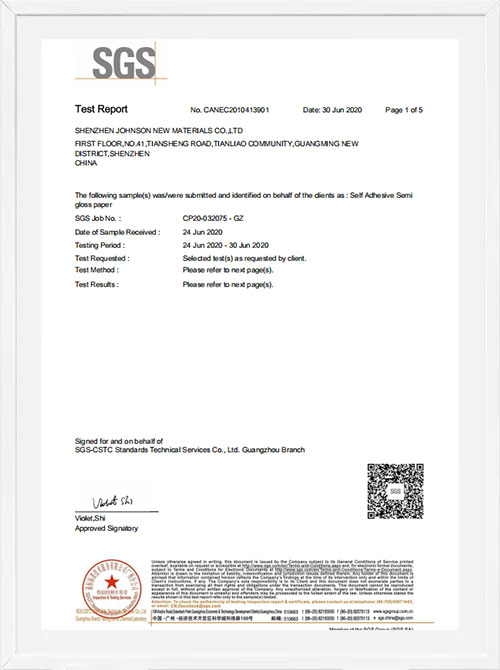
Sourcing Tire Adhesive Labelstock that has been specifically validated for clean removal from rubber, rather than tested only on standard flat panels, is what separates a label that performs well in the field from one that only performs well in a lab report — a distinction JOHNSON's quality testing is built around.
Meeting Compliance and Traceability Requirements
Tire labeling frequently carries a regulatory function alongside its branding role, including DOT identification codes, EU tire label energy ratings, and traceability barcodes tied to production batches. These printed elements need to remain legible for the full expected life of the label, which means print method and facestock have to be selected with the same care as the adhesive itself.
JOHNSON's sales team works closely with manufacturers to match the right Tire Label Material to the specific combination of temperature exposure, removability, and print compliance each production line requires, since getting any one of those three wrong tends to surface as a field complaint well after the label has already shipped with the tire.








 English
 русский
 Español