
-
About Us
Why Choose Us?We are equipped with advanced high-speed adhesive coating lines, boasting a monthly production capacity of 20 million square meters. These machines support both hot melt and acrylic adhesive applications, enabling us to ensure fast delivery and consistent quality while meeting the diverse needs of the market. Our sales team works closely with you to fully understand your specific requirements.
 Coming From China, Marketing To The World.
 -
Solutions
Professional Label Material SolutionsAt Johnson, we understand that every industry faces unique labeling challenges. With 20 years of specialized expertise and strong R&D capabilities, we provide more than just materials — we deliver customized solutions that ensure “process compatibility, scenario suitability, and rapid delivery.
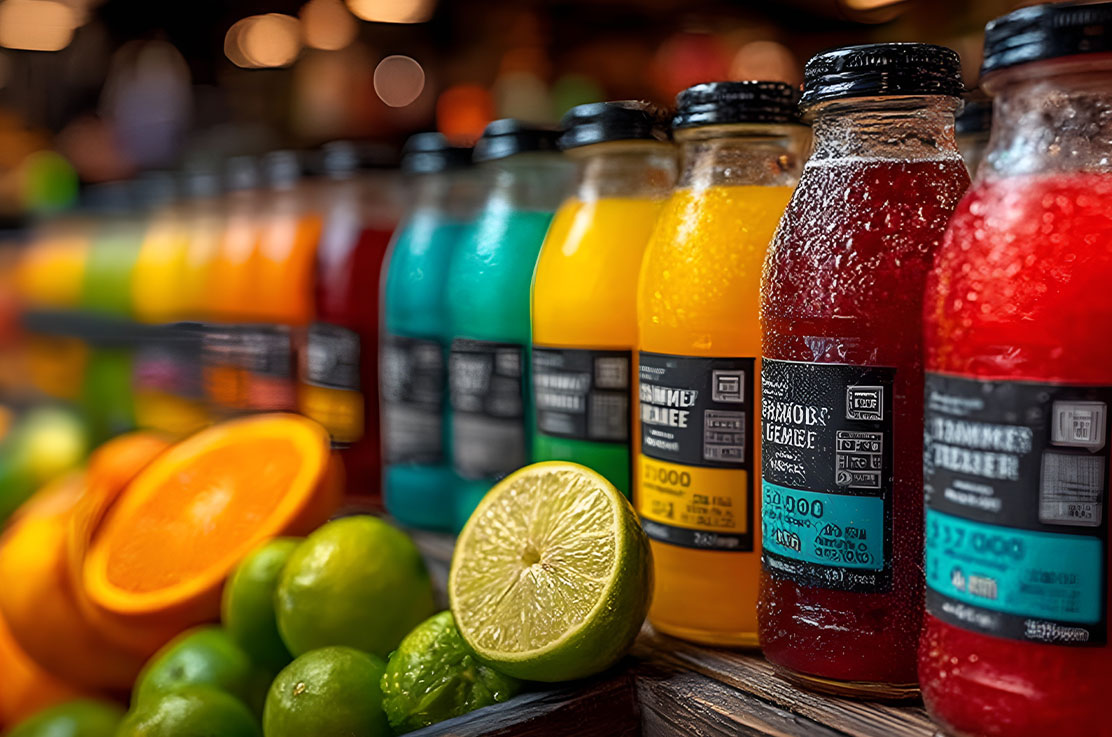
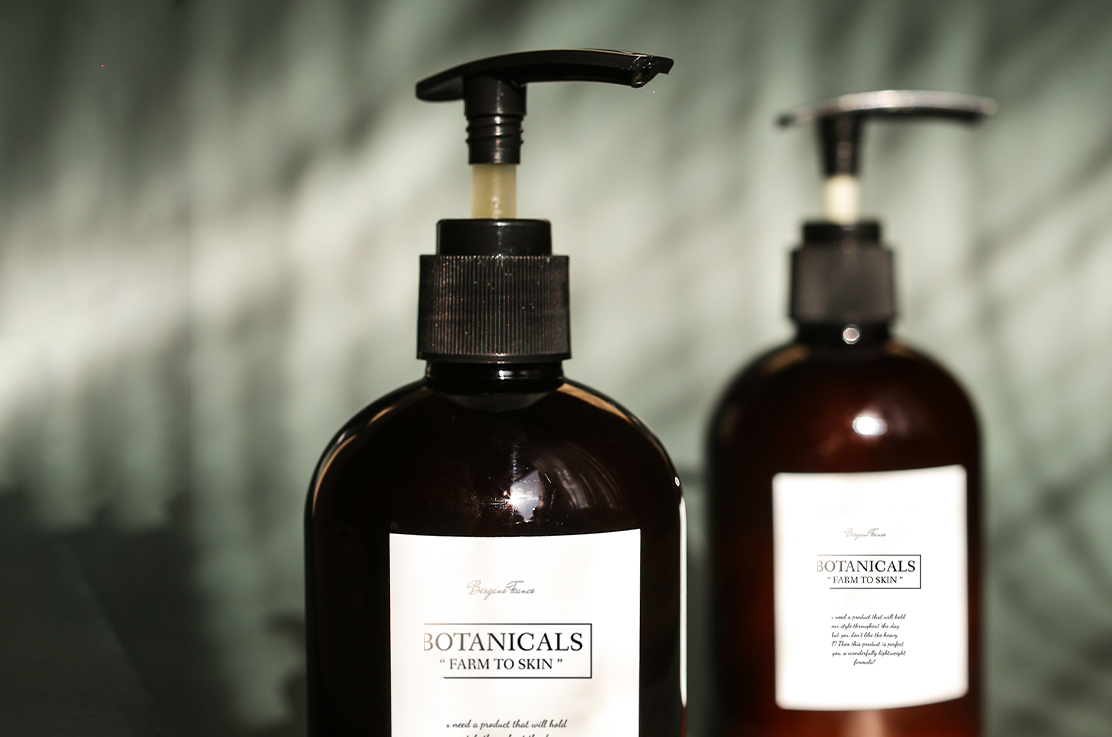

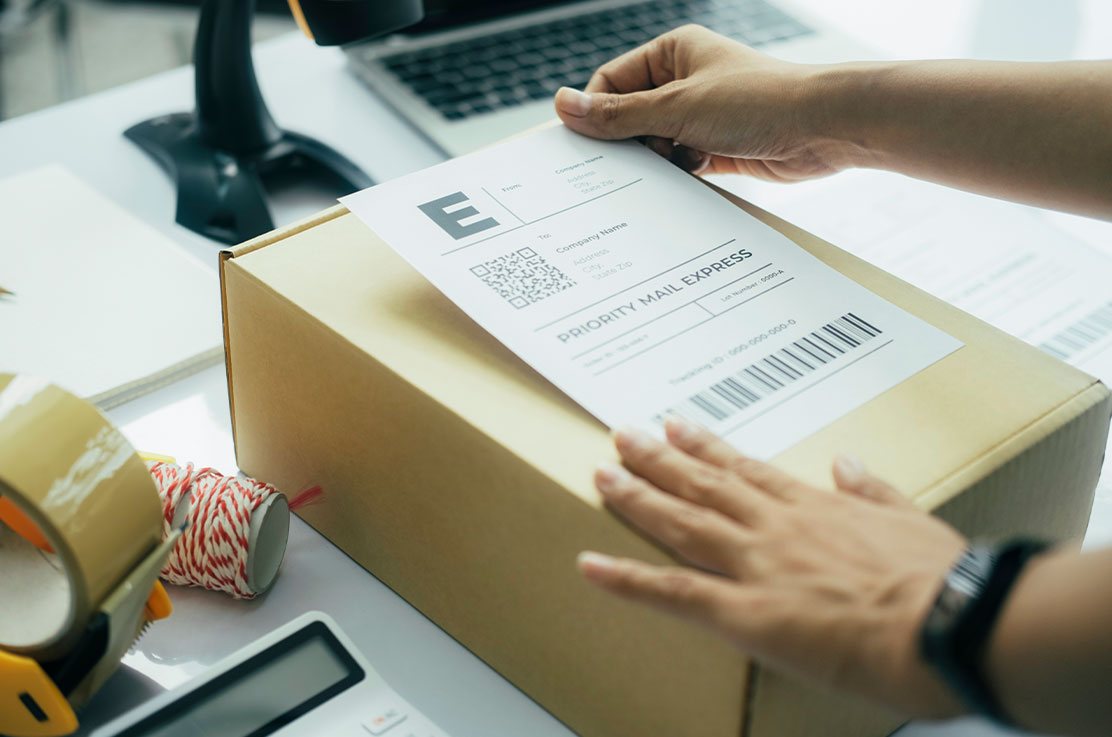
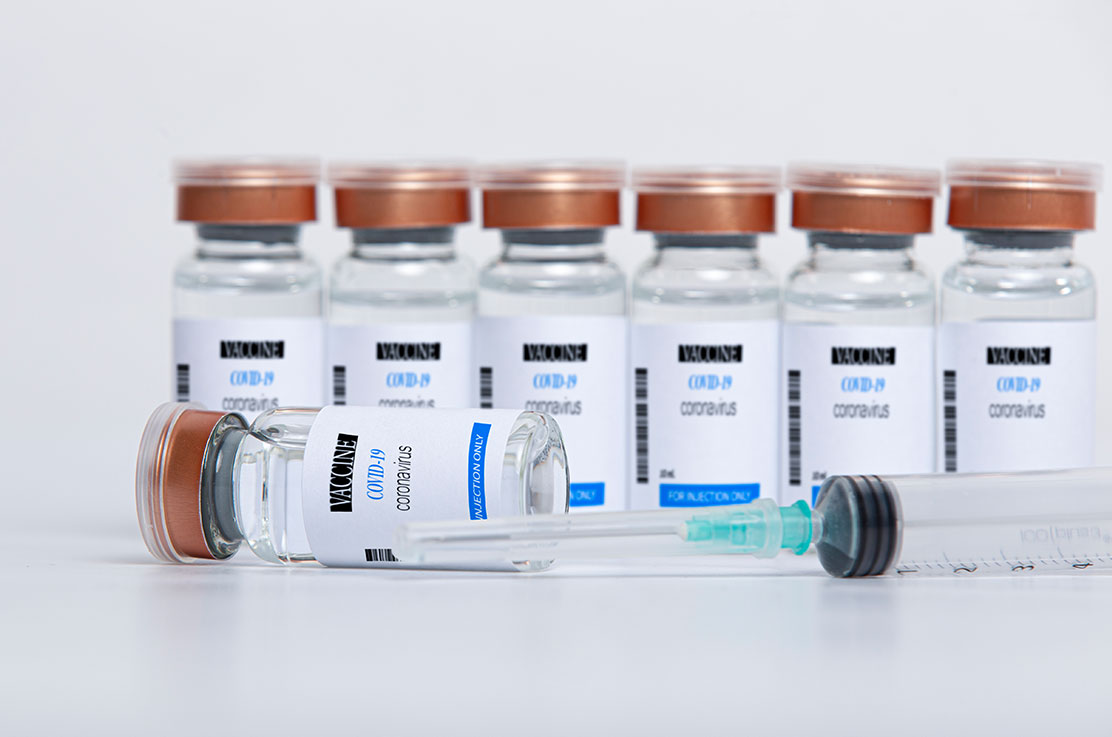 Eco-Friendly Labels, Zero Compromise on Quality
 -
Products
SustainabilityIn the field of non-dry adhesive label materials, we don’t just "produce well"—we go further with environmental protection as our technical and ethical responsibility, turning every label into a "sustainable" carrier.
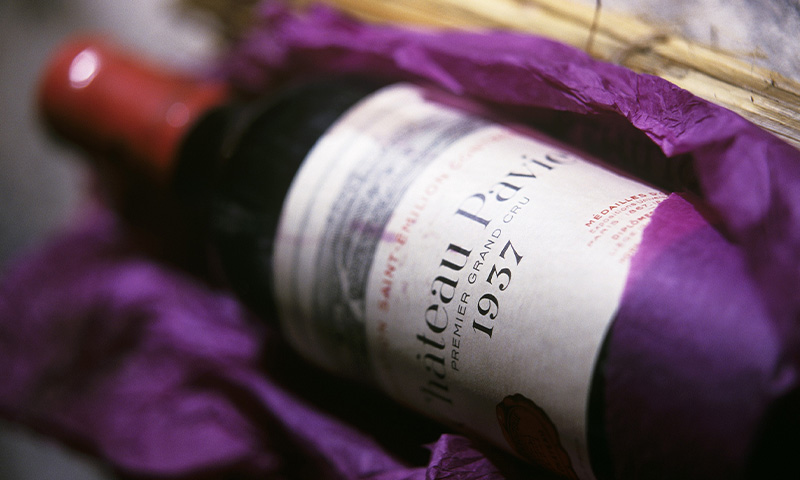
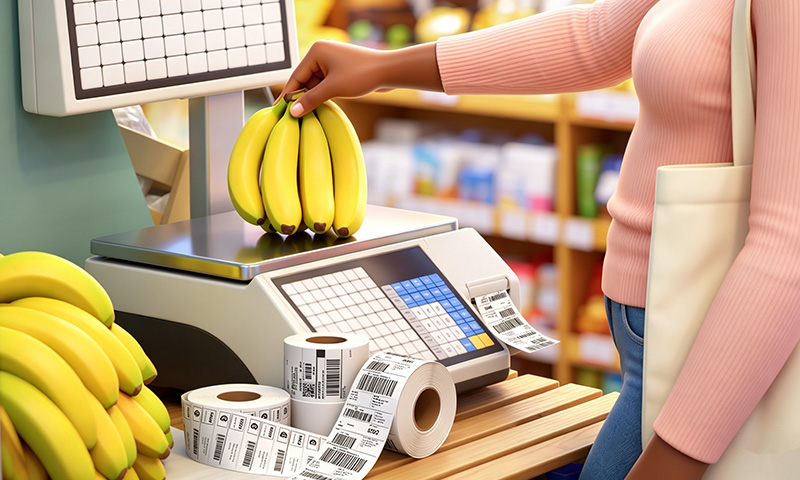
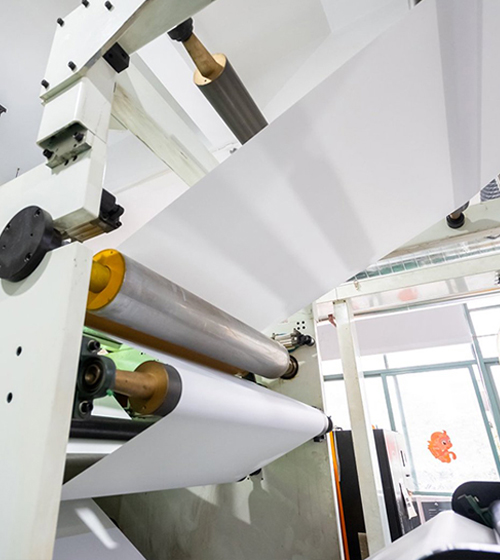 Eco-Friendly Labels, Zero Compromise on Quality
 -
News
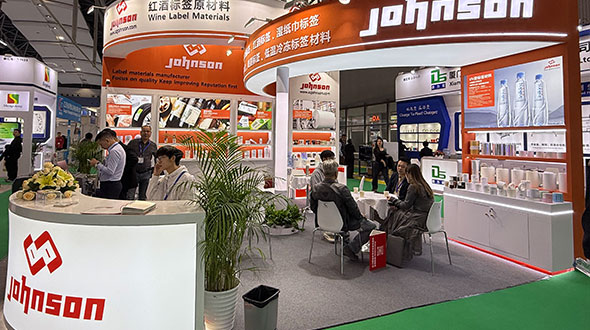 Wine Labelstock Invites You to Labelexpo Asia 2025
From December 2 to 5, 2025, Labelexpo Asia 2025, one of the most significant events in the global label and packaging printing industry, will take place at the Shanghai New International Expo Center. ...
 English
 русский
 Español
Custom Self Adhesive Label Materials: How to Specify the Perfect Stack
Content
- 1 What "Custom" Means in Self Adhesive Label Materials
- 2 Start with the Face Stock: Paper vs. Film
- 3 Match the Adhesive to the Surface and Environment
- 4 Don't Overlook the Release Liner
- 5 Let the Application Define the Specification
- 6 Verify Performance Before You Commit
- 7 Build the Specification, Then the Label
A food packaging company once ordered a standard paper label with permanent hot melt adhesive for yogurt cups that would sit in refrigerated display cases. Within two weeks, store managers started reporting labels peeling off the lids. The material was not defective. The adhesive simply could not hold on the cold, damp surface of a refrigerated cup. That is why custom self adhesive label materials matter: every layer of the label, from face stock to adhesive to release liner, can be engineered to match the actual conditions of your product, your printing process, and your production line.
What "Custom" Means in Self Adhesive Label Materials
Custom does not mean a custom print design. In the material supply chain, a custom label material means that the combination of face stock, adhesive, and liner has been specified for a defined set of performance requirements. Standard stocks are designed to work acceptably across many applications. Custom stocks are designed to work excellently in one.
The three layers each carry a distinct job:
- Face stock: the visible, printable layer that determines appearance and physical strength.
- Adhesive: the bonding layer that controls peel, tack, temperature resistance, and removability.
- Release liner: the carrier that protects the adhesive during printing, die-cutting, and application.
Changing any of these variables changes how the finished label behaves. The useful question is not which material is best, but which combination is best for the surface, the environment, and the application equipment you use.
Start with the Face Stock: Paper vs. Film
The face stock is the layer that receives the print and faces your customer. It sets the visual appearance, print quality, and mechanical durability of the label.
Paper Face Stocks
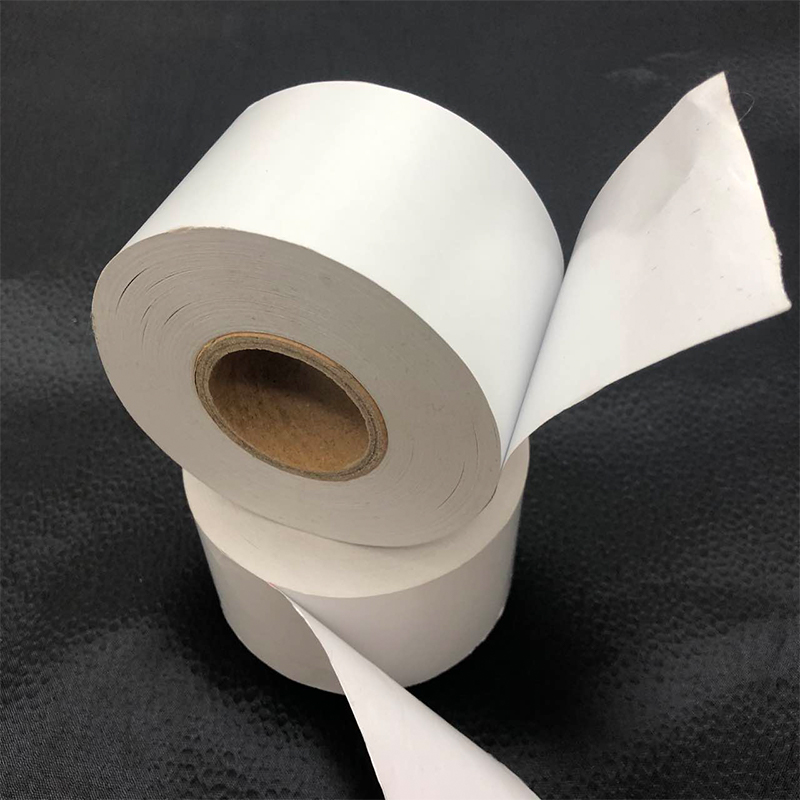
Paper labels remain the first choice for many applications because they are economical, easy to print, and compatible with standard recycling streams. Direct thermal papers, such as a 70gsm top thermal paper, work well in logistics and retail where a fast thermal print and a controlled shelf life are acceptable. Thermal transfer and semigloss papers offer a more durable print surface for longer-lived product labels. Metallized papers add a brushed or mirror metallic finish that suits premium packaging without the cost of a film substrate.
Film Face Stocks
Film labels solve the problems that paper cannot. They resist moisture, withstand chemical exposure, conform to curved surfaces, and survive rough handling. Three film families cover most label needs:
- BOPP films offer high gloss, transparency, and dimensional stability at a moderate cost. They are a common choice for beverage bottles, cosmetic jars, and household products.
- PP films are slightly softer and conform well to squeezable containers. They are available in matte white, glossy white, and transparent variants.
- PET films are the strongest of the three. They resist solvents, abrasion, and temperature extremes, which makes them a typical answer for electronics, chemical containers, and industrial equipment.
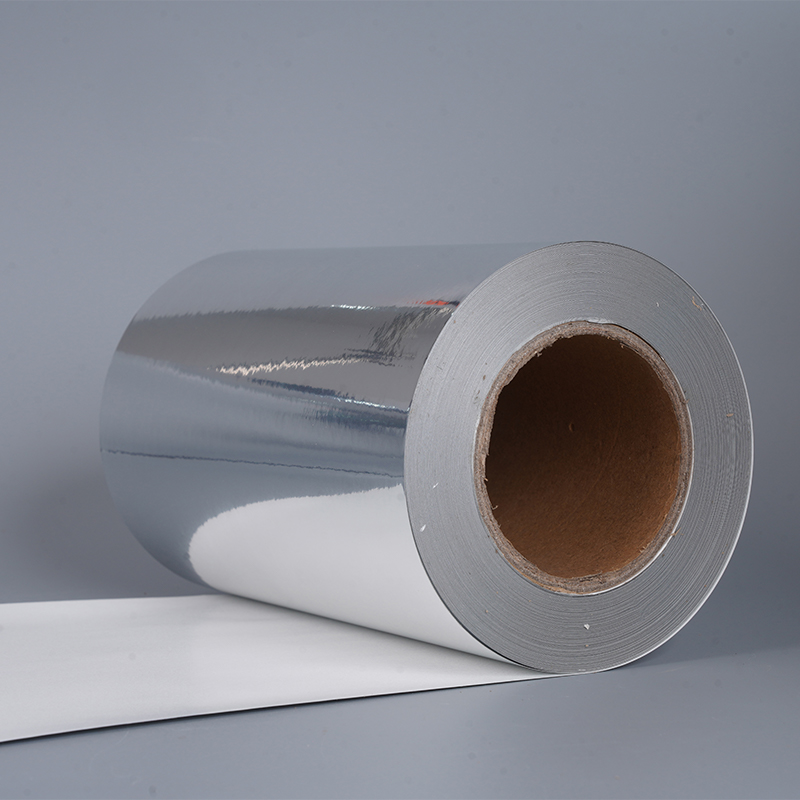
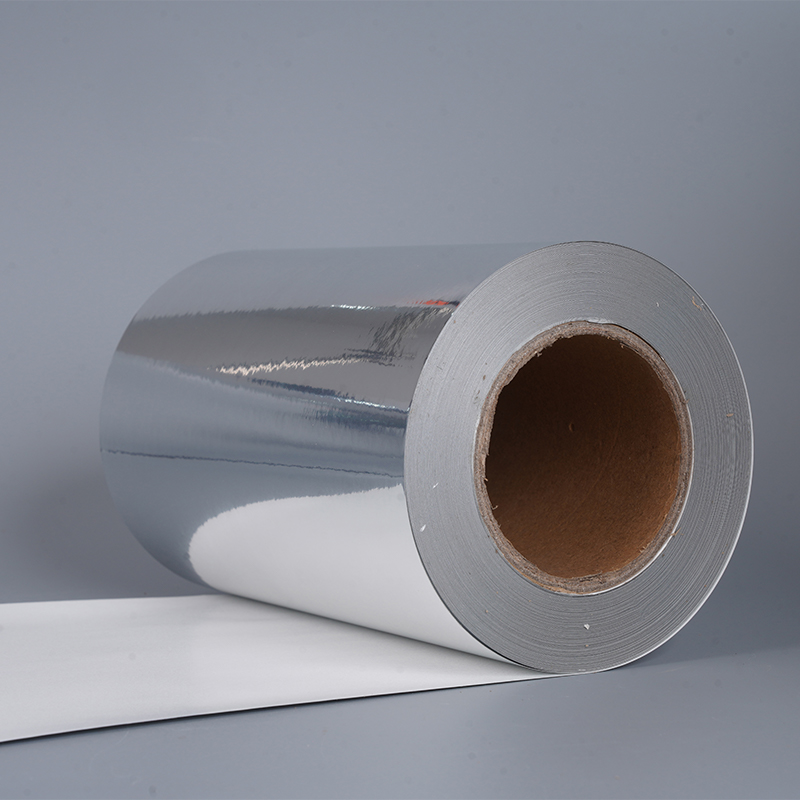
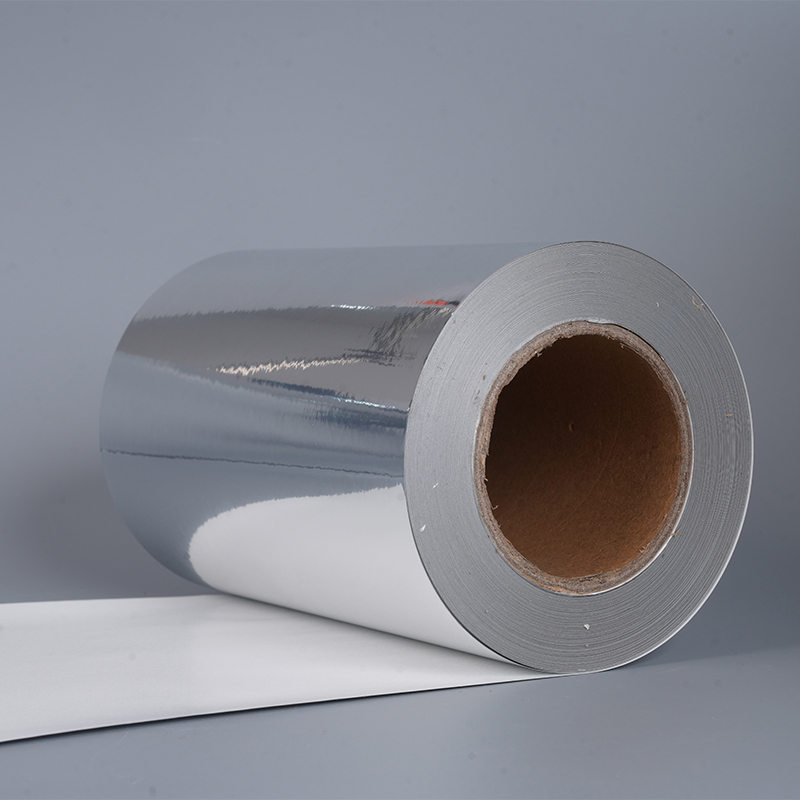
For a metallic, premium look on glass or plastic packaging, a 50 micron glossy silver BOPP film with acrylic adhesive is a widely used starting point. It offers the reflective appearance of foil with better tear resistance and smoother die-cutting behavior.
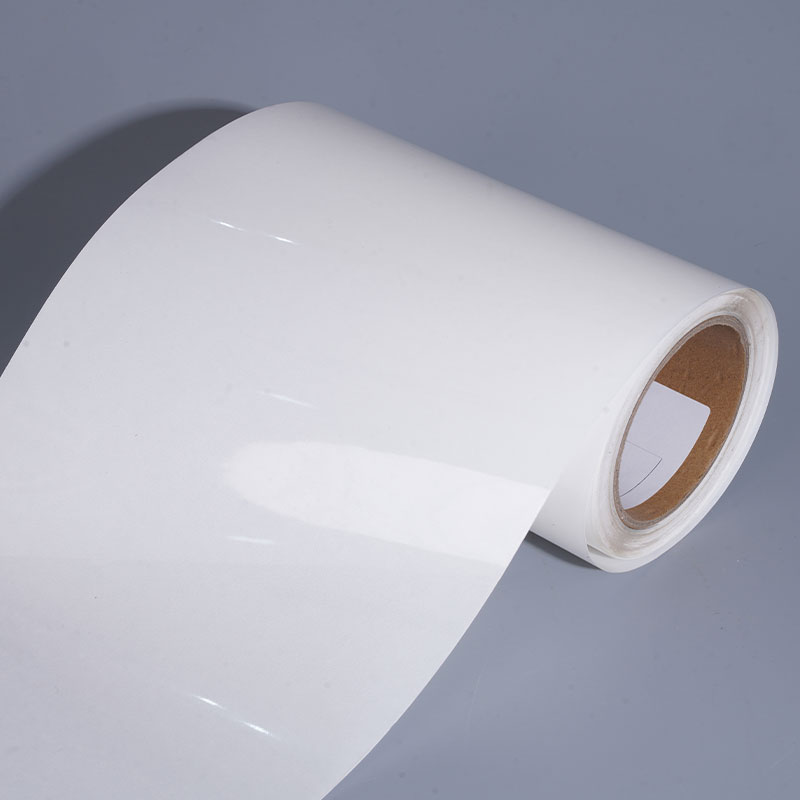
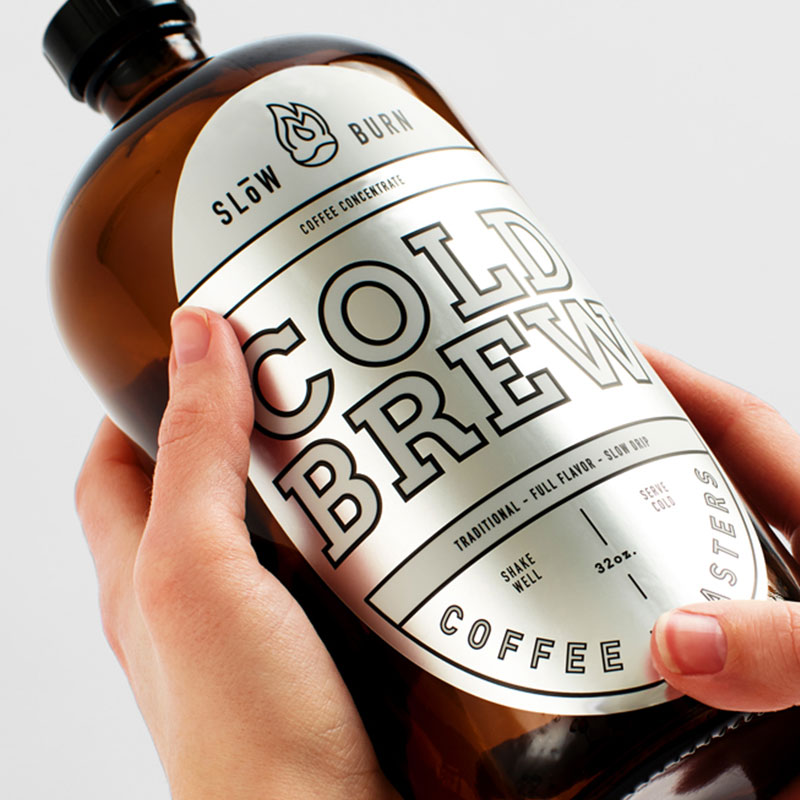 Self adhesive BOPP Film JS033A – 50mic Glossy Silver BOPP / Acrylic / 60gsm WhShenzhen Johnson New Materials Co., Ltd is China Custom Self adhesive BOPP Film JS033A – 50mic Glossy Silver BOPP / Acrylic / 60gsm Whi...View Product →
Match the Adhesive to the Surface and Environment
The adhesive is the layer that decides whether a label stays on the product. It is also the layer where most specification mistakes happen. Adhesives are generally classified by chemistry and by removability, and both determine the usable temperature range and the bond strength.
| Adhesive type | Key characteristic | Typical applications |
|---|---|---|
| Hot melt | High initial tack, fast bond, economical | Dry goods, bottles, jars, general packaging |
| Acrylic (emulsion or solvent) | UV stability, clarity, heat resistance | Beverage, cosmetics, outdoor and cold storage |
| Removable | Clean removal without residue | Price tags, reusable containers, returns labeling |
| Low-temperature / specialty | Maintains bond at low temperatures, resists frost and grease | Frozen food, tires, industrial parts |
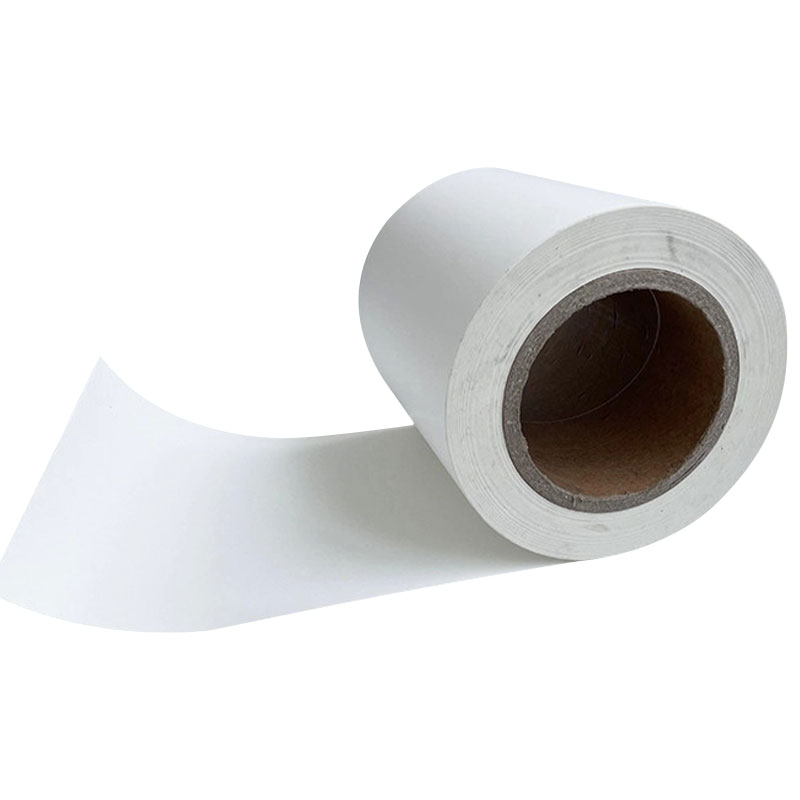
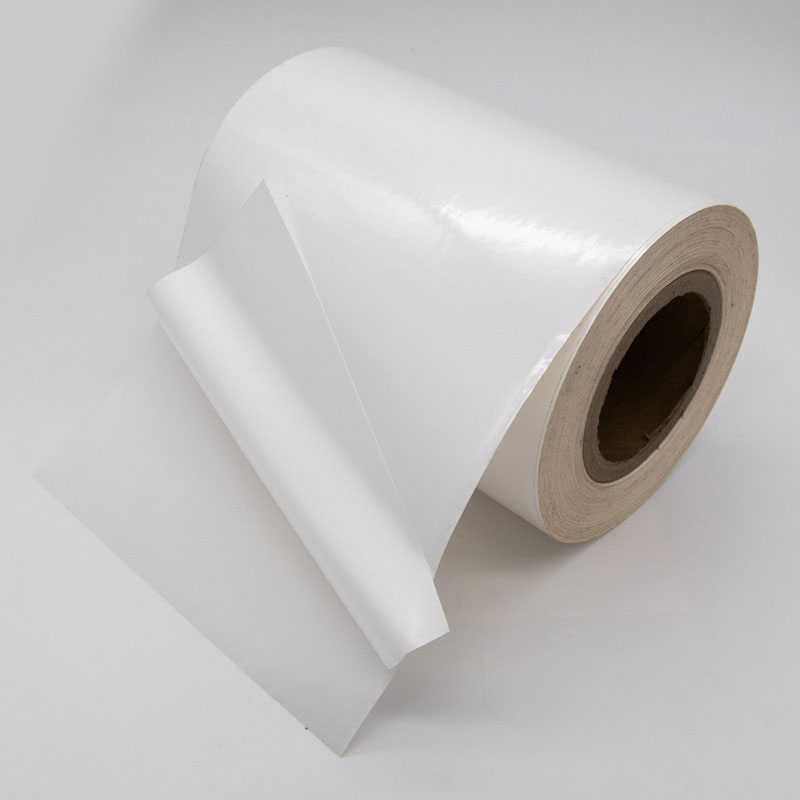
The same face stock with a different adhesive can be the difference between a label that falls off at 4°C and one that stays through the entire supply chain. For frozen food packaging, a glossy white PP labelstock with a low-temperature adhesive keeps its bond when applied to cold surfaces, where standard hot melt adhesives become brittle.
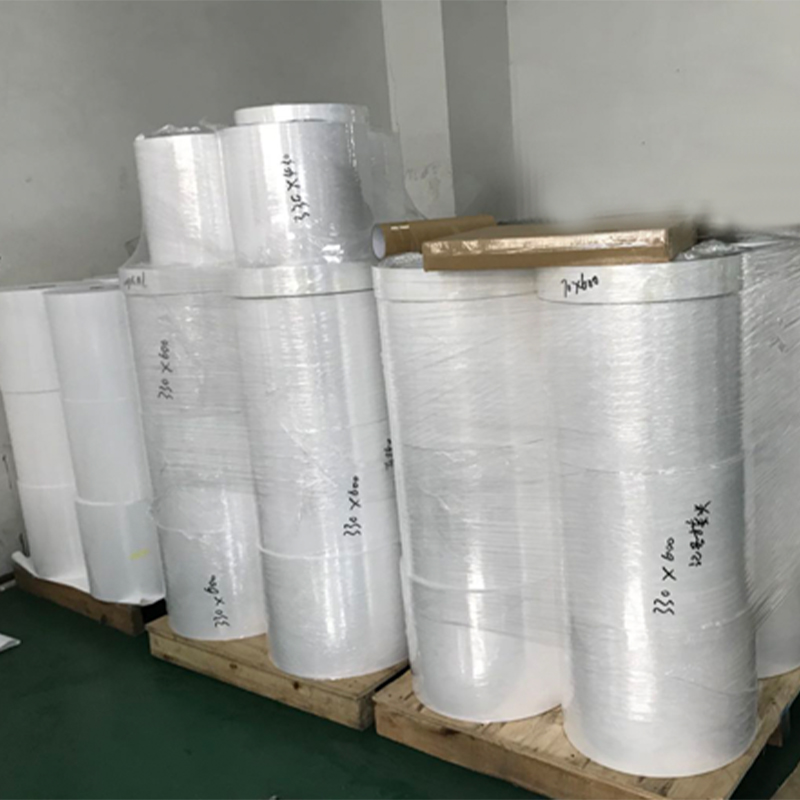 Frozen Food Labelstock PM 080E1 60mic Glossy white PP / Frozen /60gsm white glaShenzhen Johnson New Materials Co., Ltd is China Custom Frozen Food Labelstock PM 080E1 60mic Glossy white PP / Frozen /60gsm white glas...View Product →
Don't Overlook the Release Liner
The release liner is the layer nobody sees, but it plays a major role in how smoothly a label runs through the press and the applicator. The liner must be dimensionally stable, release the label at a consistent force, and survive die-cutting without tearing.
- Glassine is the workhorse of the industry. It is smooth, dense, and economical, and it works well for most paper labels.
- Kraft paper liners are thicker and more rigid, and they are common for larger labels or when higher caliper is needed for stacking and feeding.
- PET release film is moisture-resistant and strong, and it is the preferred liner for thin film labels that need precise die-cutting and transfer.
Release coatings can be tuned as well: a tighter release suits labels that must stay flat during stamping, while a lighter release speeds high-volume automatic application. If a label is jamming on the applicator, the liner is often the first place to look.
Let the Application Define the Specification
Rather than starting from a generic product sheet, start from the end use. The conditions a label will face during storage, transport, and use determine the material specification.
In food and beverage labeling, the main challenges are moisture, grease, cold storage, and sometimes recyclability. Wine bottles, for instance, may need a wet-strength paper that does not degrade in an ice bucket, or a film that withstands cellar humidity. Frozen food requires adhesive systems that bond below freezing and stay anchored through temperature cycling.
In logistics and warehousing operations, the priority is usually print speed and barcode legibility. Direct thermal paper with high image stability and smudge resistance is standard, and linerless labels are gaining ground because they reduce waste and increase labels per roll.
Cosmetic and personal care brands often gravitate toward PET films because the decorative finish is part of the product experience. A 50 micron glossy silver PET film, for example, combines a reflective surface with the dimensional stability needed for small, precisely applied labels. Electronics and industrial applications emphasize dimensional tolerance and chemical resistance, while medical labels must meet cleanroom and sterilization requirements.
Because so many variables interact, the most reliable way to specify a material is to document a set of requirements before contacting suppliers: print method, surface material, application temperature, storage temperature, exposure to water or chemicals, and expected label life.
Verify Performance Before You Commit
Custom materials need verification, not just trust. Ask your supplier for a technical data sheet that lists face stock thickness or grammage, adhesive type, liner caliper, peel adhesion, and application temperature range. Then run a practical test on the actual surface and with the actual equipment you use.
A well-configured trial batch should tell you whether the material prints cleanly, die-cuts sharply, and applies consistently on your line. It should also reveal how the label behaves after 24 hours, one week, and one month in the intended environment. Reputable suppliers expect these tests and will help you adjust the formulation if a parameter is off.
Lead time and batch consistency matter as much as the initial specification. Working with a material manufacturer with in-house coating and converting reduces the risk of variation between batches and shortens the feedback loop when problems appear.
Build the Specification, Then the Label
Custom self adhesive label materials are not about adding complexity. They are about removing uncertainty. When face stock, adhesive, and liner are chosen for a specific purpose, the label stops being a compromise and becomes part of the product's reliability.
Start with the surface and the conditions the label must survive. Work through face stock, adhesive, and liner in that order. Test on your own line. Then choose a supplier that treats your specification as the beginning of the conversation, not the end of one.
Your email address will not be published. Required fields are marked *
Contact Details
TEL: +86-15626470581
E-mail: sales@szjohnson.com
Location
Address: Building 1, Room 201, Zhijianeng High-tech Park, No. 65 Hongyin Road, Lihu Community, Xinhu Street, Guangming District, Shenzhen 518107, Guangdong Province, China
Get In Touch
Copyright © Shenzhen Johnson New Materials Co., Ltd. All Rights Reserved.
Wholesale Self Adhesive Paper Manufacturers Adhesive Label Roll Factory